
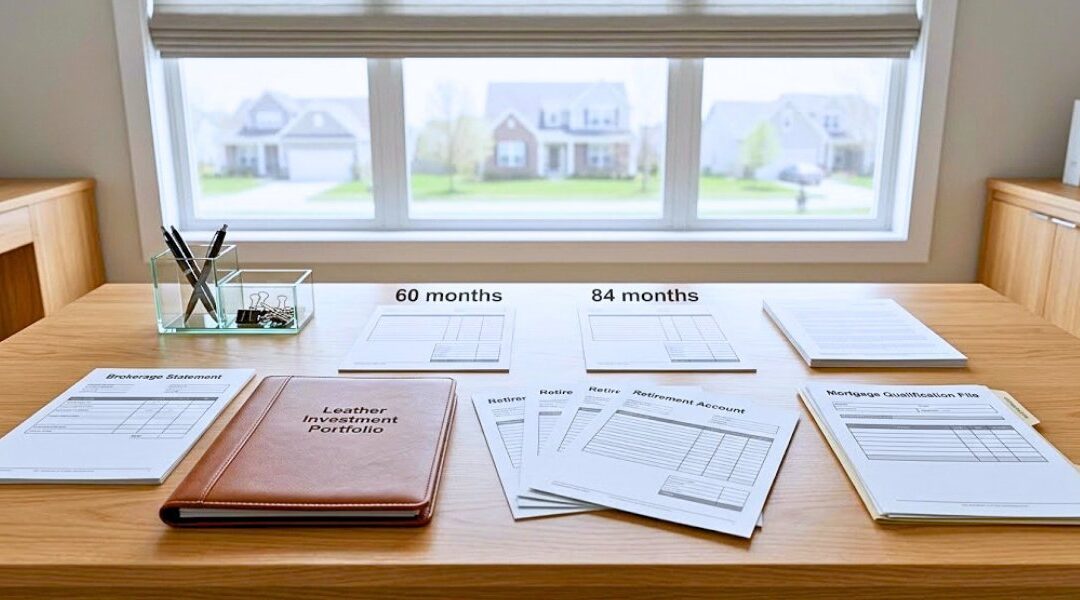
A large investment portfolio should work in your favor when you want to buy a home. For retirees and asset-rich borrowers without W-2 income, traditional mortgage qualification can make it harder to demonstrate financial capacity. Asset depletion loans offer another approach by using eligible assets to calculate qualifying income without necessarily requiring liquidation.
Asset depletion loans allow lenders to calculate qualifying income from eligible investment and savings assets. The calculation method and repayment period vary by lender and loan program. These loans may suit retirees, borrowers with inherited wealth, and high-net-worth buyers whose assets provide a stronger basis for qualification than their reported income alone.
Turning Eligible Assets Into Qualifying Income
Most mortgage qualification relies on documented, recurring income. Lenders generally look for stable earnings, often supported by employment and income records. However, retirees and other borrowers may have substantial wealth without traditional employment income. Their assets may provide significant financial resources that standard income calculations do not fully reflect.
An asset depletion loan offers another approach by converting eligible assets into a monthly qualifying income figure. Depending on the program, borrowers may qualify without liquidating those assets. The lender applies a specific formula to determine how much income can count toward mortgage qualification. The key difference is that asset depletion underwriting considers eligible assets alongside other financial factors, rather than relying primarily on traditional income.
How Asset Depletion Calculations Work
Asset depletion calculations vary by lender and loan program. The formula affects the monthly qualifying income generated from eligible assets. Tevis explains three approaches available through his lending options:
“There are a few variations on how this works. One method is we take the eligible assets and divide by 84 months. A million dollars divided by 84 is roughly $12,000 a month in qualifying income. Another takes net qualified assets and divides by 60 months instead of 84, depending on whether the money is liquid or if they’d have to take a penalty to access it. We also have a third option that does a 10-year utilization draw schedule.”
— Tevis Durbin, Producing Branch Manager, Supreme Lending
The appropriate calculation depends on the borrower's eligible assets and the program's requirements. The 84-month, 60-month, and 10-year methods can produce different qualifying income figures. A lender can evaluate which options fit the borrower's financial situation.
Interest rates also depend on the loan program and other underwriting factors. Borrowers should compare available options rather than assume one calculation method guarantees better pricing.
Some asset depletion programs are offered as non-QM loans. However, asset depletion does not automatically place a mortgage outside Qualified Mortgage guidelines. Confirm the applicable program's requirements with the lender.
Indiana Borrower Profiles That May Benefit From Asset Depletion
Asset depletion loans may suit borrowers with substantial eligible assets but limited traditional income. Credit, down payment, and reserve requirements vary by lender and program. For the right borrower, this financing approach can create another path to mortgage approval.
Three borrower profiles may benefit from exploring asset depletion financing:
- Retirees who have left the workforce but have not begun drawing from their investment accounts.
- Individuals with inherited wealth who lack consistent employment income and meet the program's asset eligibility requirements.
- Buyers with limited retirement income whose Social Security or pension payments fall short of the lender's qualifying threshold.
Some borrowers may prefer financing over paying cash for a home. Liquidating investments could reduce portfolio diversification, trigger tax consequences, or interrupt potential investment growth. An asset depletion loan may allow eligible borrowers to preserve more of their investments while financing their purchase.
Borrowers with fixed income and substantial assets may also benefit from understanding how Social Security income affects mortgage qualification. Talk to the Durbin Team to review your assets, income, and available financing options.
Which Assets Count Toward Qualification?
Not all assets count equally, and not all lenders offer multiple asset depletion programs. These differences help explain why one lender may decline a borrower while another identifies a possible path to approval.
Liquid assets, such as checking, savings, and brokerage accounts, may receive different valuations depending on the program. Retirement accounts may be discounted based on eligibility, access restrictions, and potential withdrawal penalties. Some programs require unrestricted access to retirement funds, while others apply specific adjustments to account balances. Lenders follow investor guidelines that determine which assets qualify and how much of their value counts toward qualifying income. Fannie Mae's employment-related asset guidelines provide one example of these requirements.
Access to multiple asset depletion programs can help lenders evaluate options that fit each borrower's financial situation. Debt-to-income (DTI) limits also vary by program. The calculated qualifying income must satisfy the applicable underwriting requirements, so borrowers should confirm the specific limits with their lender.
How a Retiree Qualified for a Vacation Home
A retiree wanted to purchase a vacation home. Fixed income covered living expenses comfortably, but the new property's monthly payment pushed the borrower's debt-to-income ratio beyond standard limits. The borrower held well over $1 million in retirement accounts earmarked for eventual withdrawals.
The team applied the 84-month calculation, generating more than $12,000 in monthly qualifying income. Combined with existing fixed income, this helped the borrower qualify without liquidating the portfolio before closing.
Substantial investments may help you qualify for a home while preserving your portfolio. Use Supreme Indiana's mortgage calculators to estimate potential payments before discussing your financing options.
FAQs About Asset Depletion Loans
Must I withdraw money from my assets to qualify?
Not necessarily. Asset depletion is a mortgage qualification method that calculates income from eligible assets for underwriting purposes. Depending on the program, borrowers may qualify without liquidating those assets. The lender will determine which accounts qualify and how much of their value can be used to calculate income.
What credit score is typically required for an asset depletion loan?
Credit score requirements vary by lender and loan program. Some programs may require scores in the high 600s or low 700s, while others set different minimums. A higher credit score may also improve pricing and available terms. Ask your lender about the specific requirements for the program you're considering.
Can IRAs and 401(k)s count toward qualifying assets?
Yes, some programs allow eligible retirement accounts to count toward qualifying assets. The amount considered may depend on access restrictions, withdrawal penalties, and program guidelines. Age 59½ affects the tax treatment of many retirement account withdrawals, but not mortgage eligibility itself. Confirm the lender's rules before assuming your full retirement balance will count.
Can I combine fixed income with investment assets?
Yes, some programs allow income from sources such as Social Security, pensions, and annuities to be combined with income calculated from eligible assets. Combining these sources may help borrowers whose regular income falls short of the lender's requirements but whose portfolios provide additional qualifying capacity. The lender must verify each income source and apply the program's underwriting rules.
Is an asset depletion loan the same as a reverse mortgage?
No. An asset depletion loan is a forward mortgage with regular monthly payments. A reverse mortgage, such as a Home Equity Conversion Mortgage (HECM), is available to eligible homeowners aged 62 and older. It allows them to borrow against their primary residence without making monthly mortgage payments. Borrowers must still meet obligations for property taxes, homeowners insurance, and home maintenance.
Are asset depletion loan rates higher than conventional mortgage rates?
They can be. Some asset depletion programs carry higher rates than conventional mortgages, although pricing varies by lender, loan structure, and borrower qualifications. Credit score, down payment, loan size, and available reserves can all affect the rate. Financing may still appeal to borrowers who want to preserve investments rather than sell assets. However, potential taxes, investment returns, and borrowing costs should be evaluated individually before comparing a mortgage with a cash purchase.
What is the difference between an asset depletion loan and a DSCR loan?
Asset depletion loans use eligible borrower assets to calculate qualifying income. Debt Service Coverage Ratio (DSCR) loans generally evaluate a property's rental income against its debt obligations. A DSCR loan may suit investors purchasing income-producing properties, especially when personal income documentation is limited. Asset depletion may be a better fit when the borrower's eligible assets support qualification. Property eligibility and occupancy restrictions vary by program, so investors should compare requirements before choosing a loan.
Which asset depletion formula fits my situation?
The appropriate formula depends on your eligible assets, liquidity, and the lender's program requirements. Some programs divide eligible assets over 60 or 84 months, while others use a longer utilization period. Each method can produce a different qualifying income figure, affecting how much you may be able to borrow. A lender offering multiple options can compare the available calculations and explain how each affects qualifying income, pricing, and eligibility.
Turn Your Assets Into Buying Power
If you're wondering whether a home or second property is within reach, your investment portfolio may help you qualify. Asset depletion loans let lenders calculate qualifying income from eligible assets, even when traditional income documentation falls short.
The Durbin Team can compare available programs for retirees, borrowers with inherited assets, and high-net-worth buyers throughout Indiana. Connect with Supreme Lending to review your financial situation, explore your options, and plan your next purchase.