
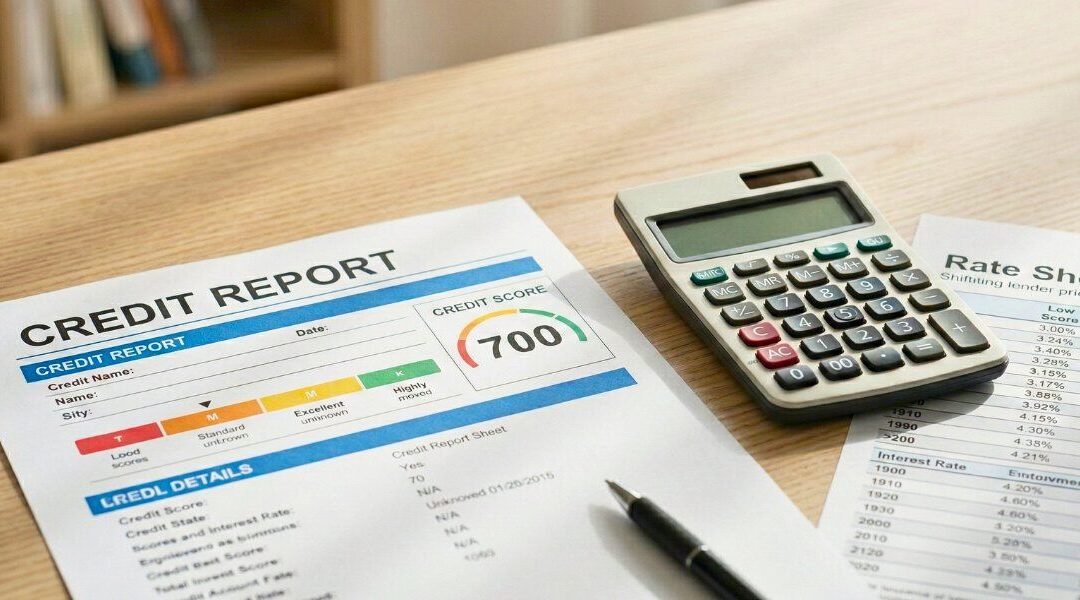
Five years ago, buyers across Indiana heard the same advice: if you had a 700 credit score, you were in great shape.
That benchmark became the standard. For years, a 700 score was the ultimate green light for top-tier pricing and a smooth underwriting process.
Today, that assumption can quietly cost you.
While the credit system stayed the same, lender pricing models evolved. And the difference between what felt like “excellent” five years ago and what qualifies as top tier now is more noticeable than most buyers realize.
The Hidden Shift in Credit Tiers
Credit scoring formulas still operate the same way at the core. What changed is how lenders price risk within specific credit bands.
That shift can mean:
- A slightly higher interest rate
- Increased upfront costs
- Tighter qualification margins
- Less flexibility during underwriting
The frustrating part? Most borrowers did nothing wrong. They paid on time and stayed responsible. But institutional risk tolerance shifted, leaving many responsible borrowers behind.
Tevis Durbin has been originating mortgages in Indiana since at least 2000 and serves as the Producing Branch Manager for Supreme Lending. Having worked through post-2008 credit tightening, pandemic-era easing, and today’s recalibration, he’s seen how lender risk tolerance evolves, even when consumers assume it hasn’t.
“One of the things that’s slowly changed is it used to be maybe five years ago… if you were above 700, you were A+. Jump forward to today, that’s 740. So, if you’re not above a 740, you’re not an A+. And that difference between 700 and 740 is noticeable on an interest rate. People think, ‘I’m 700. I’m good to go.’ And it could be something small. Maybe they decided to carry a balance on a credit card. Maybe they closed a credit card and that’s what kicked them from 760 to 700. Something small like that.”
Small moves lead to real pricing impacts. That difference between 700 and 740 can mean thousands of dollars over the life of a loan.
Why a 700 Credit Score No Longer Guarantees Top-Tier Pricing
Lenders now reserve their absolute best pricing for higher tiers. What used to qualify as an A+ often sits in a mid-tier category.
The gap between tiers may look small on paper. In practice, it can mean:
- An eighth to a quarter percent difference in rate
- Higher discount points
- Reduced lender credits
- Stricter debt-to-income flexibility
On a $300,000 loan, even a minor rate adjustment significantly alters both your monthly payment and long-term interest costs.
Institutions remember volatility. They build buffers quietly. Those adjustments rarely make headlines, but they show up on rate sheets every day.
The 30% Utilization Rule
Many buyers believe that on-time payments fully protect their credit score. Payment history matters, but utilization carries significant weight.
Credit reports are reviewed line by line with borrowers to improve pricing before locking a loan. This hands-on optimization is where the most impactful details are identified.
Even when striving for an A+ rating, balances exceeding 30% of a credit limit can drop a score, regardless of an on-time payment history. High utilization signals that, as credit card balances grow, more money is flowing out than coming in.
It serves as an early warning system for lenders. Once that 30% threshold is crossed, the score begins to decrease. While the drop may not be significant, it can be enough to shift a rating from A+ to A.
Here is what that means in practical terms.
If your credit card limit is $10,000 and your balance is $3,500, you have exceeded the 30 percent utilization limit. The statement balance remains the critical factor, even when you pay in full every month.
That subtle shift can move you into a different pricing tier. Not dramatic, but measurable.
When Small Adjustments Deliver Big Savings
Last year, a Carmel buyer came to us confident. He carried a 708 score. Since he had never missed a payment in his life, he assumed he was already positioned for the best available terms.
When we sat down and reviewed his report line by line, we saw two cards reporting at 40 percent utilization. While he paid them off in full every month, those balances were high on the specific day his statement closed.
We worked with him clear some credit roadblocks and adjust his payment timing. By paying those balances down to below 20 percent before the next reporting cycle, we were able to run a rapid rescore.
His score moved to 742.
That shift improved his pricing enough to lower his interest rate and significantly reduce his upfront closing costs. Over the 30-year life of that loan, the savings are substantial.
Why This Matters in Indiana Right Now
Indiana remains more affordable than many surrounding markets. We often see buyers relocating from Illinois or Michigan who feel immediate relief when they compare our local pricing to their previous markets.
However, affordability does not eliminate risk pricing.
In competitive areas like Hamilton County, Zionsville, Fishers, and parts of Northwest Indiana, buyers still need clean approvals and strong pricing to compete.
A higher tier can strengthen:
- Your confidence in your monthly payment
- Your negotiating position
- Your ability to move quickly
Clarity builds leverage.
The Pre-Approval Step Many Buyers Skip
To gain full control over your financing, consider the following before touring homes:
- Pull your credit through a legitimate source
- Ask which pricing tier you fall into
- Review utilization across every revolving account
- Avoid closing accounts without guidance
- Ask whether a rapid rescore strategy makes sense
Sometimes paying down a balance will materially improve your loan terms. Other times, the impact is negligible. The key is knowing the difference before you commit your capital.
In this market, guessing costs much more than verifying.
Common Questions Indiana Buyers Ask About Credit Scores
Is 700 still considered good?
Yes. It remains a solid score and qualifies for many loan programs. However, it may not unlock the absolute best available pricing tier.
How high does my score need to be for the best rates?
Many lenders reserve top-tier pricing for scores of 740 or higher, though program guidelines vary.
Should I close unused credit cards?
Usually no. Closing accounts can reduce your total available credit and increase your utilization ratio.
Does paying off collections immediately help?
It depends on the scoring model and the type of collection. Strategy matters.
How fast can a rapid rescore work?
In many cases, updates can be reflected within days of submitting documentation.
Will checking my credit hurt my score?
A single mortgage inquiry has minimal impact, and multiple mortgage inquiries within a short window typically count as one.
When should I start preparing?
Ideally, 60 to 120 days before you plan to make offers.
Start Planning For Better Terms
Markets often shift quietly. Most buyers assume the old rules still apply. Risk tolerance changes in the background. Pricing tiers adjust. The public doesn’t get a memo.
If you are thinking about buying this year, let’s review your positioning before you shop. A small adjustment today can improve your payment for decades.
Let’s make a plan. Talk with the Durbin Team today, and we will work together to ensure you are positioned for the best possible terms.