Twenty percent down isn't a universal lending requirement or a rule every buyer must follow. For many Indiana buyers working through the numbers, it isn't even the smartest move. A 20% down payment can cost more when it leaves too little cash for post-closing improvements. If you’re planning your down payment around a number you heard rather than a number you ran, this is worth reading before you commit.
Conventional loans can allow well-qualified buyers to put down as little as 3%. PMI costs vary by borrower and loan, and borrowers can generally request cancellation at 80% of the home's original value. Draining savings to avoid that payment can leave buyers financially exposed in the first months of ownership. The right down payment fits your actual cash position after closing, not a number someone repeated until it sounded like a rule.
Where the 20% Rule Came From
The 20% threshold became a conventional lending standard tied to lender risk, not a universal buyer mandate. When borrowers put down less than 20%, lenders could require private mortgage insurance (PMI) to protect against default losses. Somewhere along the way, it became cultural shorthand for financial readiness, and that translation stuck even as lending programs evolved.
Today, some conventional loans following Fannie Mae guidelines allow as little as 3% down for eligible borrowers. FHA loans allow as little as 3.5% down, while eligible VA and USDA loans can offer zero-down financing. Putting 20% down can eliminate PMI on a conventional loan, a real benefit but only one factor in the larger calculation.
What PMI Actually Costs at 10% Down
For a borrower with a 760+ credit score putting 10% down, PMI can be relatively modest. At 90% LTV, PMI rates may range from roughly 17 to 25 basis points annually for well-qualified borrowers. On a $300,000 loan, that works out to approximately $43 to $63 per month.
Borrowers can generally request PMI cancellation when the principal balance reaches 80% of the home's original value. If the borrower is current, the servicer must generally terminate PMI when the scheduled balance reaches 78%.
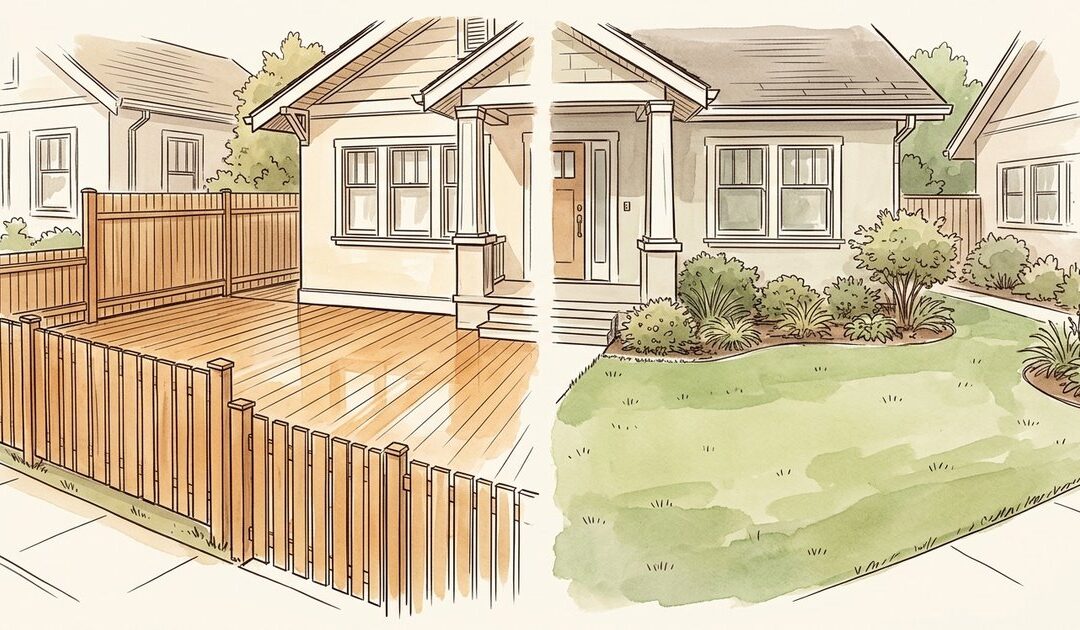
That monthly cost can look different when compared with financing post-closing improvements. A contractor payment plan for a fence carries its own interest rate. Carrying a flooring purchase on a credit card at 22% APR creates an ongoing interest expense. For a buyer who needs those improvements soon after closing, preserving cash and accepting PMI may cost less overall.
Credit score can also affect the comparison between conventional and FHA financing. Running both scenarios side by side gives buyers a more useful picture than focusing on the down payment alone.
Cash Reserves Beat a Bigger Down Payment
Reserves matter to lenders during underwriting, but they matter even more to buyers after keys are in hand. When savings get drained to hit 20% down, the cushion that handles early homeownership realities disappears with it. An HVAC repair in month three or a failed water heater before year one can put unexpected pressure on your budget. So can a driveway that cannot wait another Indiana winter.
Buyers who stretch to make a down payment and then finance post-closing needs may pay more in interest than the PMI they avoided. The goal is to stay financially stable after closing, when unexpected ownership costs begin to surface. Keeping some cash accessible while accepting a temporary mortgage insurance payment may produce a stronger overall financial position.
Not sure how your down payment amount affects your monthly payment and reserve position? Talk through the numbers with the Durbin Team before you settle on a figure.
When 20% Down Is Not the Best Move
Tevis Durbin has navigated this discussion with Indiana buyers across a wide range of financial situations during his 26 years in the mortgage industry. Then, the conversation came up in his own home:
"He was going to put 20% down, and I'm like, 'Okay, then what are you going to do when you buy the house? I thought you told me you wanted to put up a fence, and I thought you told me you wanted to put down all new flooring.' And I'm like, 'Okay, how you going to pay for that?' He goes, 'Well, we'll probably finance the fence, and we'll do the same as cash on the carpeting.' And I'm like, okay, if you put 10% down instead of 20, your mortgage insurance is going to be $28 a month. So what's the financing going to cost you on the fence?"
— – Tevis Durbin, Producing Branch Manager (NMLS #424899)
The point is not that 20% down is a bad choice. It is that avoiding mortgage insurance can make less financial sense when it leaves too little cash for improvements, repairs, or other costs after closing.
The Repeat Buyer Blind Spot Most Lenders Miss
A second myth compounds the first: repeat buyers need 20% down, and they do not. The assumption often surfaces with move-up buyers and experienced homeowners who think their options narrowed after their first purchase. Repeat buyers and move-up buyers can access conventional programs with less than 20% down. Investment properties follow different down-payment requirements.
Here is how Tevis frames it for clients who come in with that assumption:
"Most think that if you're not a first-time home buyer, you have to put 20% down. That's not the rule at all. But what's funny is you'll have somebody say, 'I'm going to put 20% down,' and then they're going to go out and put carpet on a credit card or something. Mortgage insurance is still going to fall off once you have the equity built."
— – Tevis Durbin, Producing Branch Manager (NMLS #424899)
Fannie Mae's conventional loan eligibility guidelines outline eligibility requirements without imposing a blanket 20% down requirement on repeat buyers. Indiana buyers who have owned before and feel boxed into the 20% number may have more options than their last lender mentioned. The full breakdown of conventional loan programs provides a useful starting point for seeing what may be available.
20% Down Questions, Answered
Does PMI last forever on a conventional loan?
No, PMI does not last forever on most conventional loans. Borrowers can generally request cancellation when the principal balance reaches 80% of the home's original value. The servicer must generally terminate PMI when the scheduled balance reaches 78%, if the borrower is current.
What is a realistic mortgage insurance payment at 10% down in Indiana?
There is no single PMI amount that applies to every Indiana buyer. The cost depends on factors such as credit score, loan-to-value ratio, loan amount, and the borrower's overall risk profile. A $300,000 conventional loan with 10% down could carry a very different PMI payment from another loan with a different borrower profile. A loan-specific quote gives you a more useful number than a general estimate.
Can repeat buyers put less than 20% down on a conventional loan?
Yes. Repeat buyers can qualify for conventional loans with less than 20% down, depending on the loan program and borrower qualifications. Owning a home before does not automatically create a 20% down requirement. The 20% threshold can eliminate PMI on a conventional loan. It is not a rule that applies simply because someone has purchased a home before. Two specific financing paths exist for Hamilton County first-time buyers.
Is there ever a good reason to put 20% down?
Yes. Putting 20% down can make sense when the buyer can maintain a healthy cash reserve and the PMI savings justify the upfront cost. The calculation should account for closing costs, moving expenses, immediate home improvements, and emergency savings. Twenty percent down can be a strong choice, but it should result from the buyer's actual financial position rather than a rule of thumb.
How does mortgage insurance compare to credit card interest on home improvements?
PMI is generally far less expensive than the interest charged on carried credit-card balances. For buyers who expect to finance improvements after closing, preserving cash and accepting PMI may cost less overall. The right order for paying down debt after closing can further strengthen a borrower's mortgage profile.
What happens to mortgage insurance if my credit score is below 680?
A lower credit score can increase the cost of conventional PMI, which can change the comparison with FHA financing. Buyers with lower scores may need to look at both loan types at the same down payment and compare the full monthly and upfront costs. FHA mortgage insurance also follows different duration rules, so the cheaper option is not determined by the insurance premium alone.
Can I use a seller-paid concession to cover mortgage insurance costs?
Seller concessions can generally help cover eligible closing costs and prepaid items, subject to loan-program limits. They cannot be used to fund the down payment or required reserves under Fannie Mae's rules. A rate buydown or eligible closing costs may preserve more of the buyer's cash for reserves.
How much should I keep in reserves after closing?
Reserve requirements vary by loan type, occupancy, property type, and borrower profile. Some conventional loans have no minimum reserve requirement for a one-unit primary residence, while other transactions require specific reserves. Beyond lender requirements, keeping three to six months of housing expenses available provides a cushion for repairs, maintenance, and unexpected costs.
Choose the Down Payment That Fits
The right down payment is the one that leaves you financially stable after closing, with a monthly payment you can comfortably manage.
Whether you are waiting to reach 20% or considering financing improvements separately, running the numbers first is worth the time. Your credit score, loan amount, and post-closing cash needs all matter.
The Durbin Team has worked through these decisions with Indiana buyers since 2000. Schedule a conversation today to see what your options actually look like.
ABOUT THE AUTHOR
Tevis Durbin (NMLS #424899) is a Producing Branch Manager at Supreme Lending with over 26 years of experience in the mortgage industry. Leading the Durbin Team, Tevis combines an MBA in Finance and a degree in Economics with specialized loan programs to help Midwest homebuyers navigate complex markets. He is a Certified Mortgage Advisor, serves on the State Board for the Mortgage Bankers of Indiana, and is the Communication Chair for the Hamilton County division of MIBOR.